
How to Use a VPN at Online Casinos in 2026

Article by
Updated by Jacob Evans Mar 12, 2026
Want to use a VPN at online casinos without tripping alarms or losing withdrawals? This guide shows you exactly how to set up a VPN for casino play, choose the right server, and avoid common mistakes. You'll learn how to use a VPN at online casinos safely, without breaking terms or local rules.
Reputable tech and VPN publications repeatedly highlight that the same core features: strong encryption, a strict no‑logs policy, fast servers, and a kill switch, are what matter most, whether you are streaming or gambling.
The difference with casino play is that you also have to factor in gambling laws, casino Terms & Conditions, and how bonuses are enforced.
This article focuses on the practical "how to" side rather than recommending specific brands, so it supports your existing Best VPN Casinos page instead of competing with it.

Opinion of Andrew Collins
“VPNs let you play securely abroad, but pick the wrong servers or ignore T&Cs, and you'll face KYC hell or frozen funds. Here's how to do it right.”
Before You Start: Law, Licence, and Terms
Using a VPN is legal in most countries, but using it to access online gambling can still clash with local laws or specific casino rules.
Before you start tweaking settings, treat these three checks as pre‑flight drills.
Local rules where you actually sit
Some jurisdictions ban or tightly restrict online gambling for residents regardless of where the casino is based. Others only permit play at locally licensed sites.
If you use a VPN to access gambling where it is explicitly illegal, a VPN does not make that activity legal; it just makes it harder to trace.
The casino's regulator
Strict regulators like the UK Gambling Commission and Malta Gaming Authority expect operators to block players in prohibited territories and to take geolocation seriously.
Offshore regulators such as Curaçao or Anjouan are generally more relaxed, which is why crypto‑first, VPN‑tolerant casinos tend to use them.
The casino's terms & conditions
Most casinos include wording that bans VPNs, proxies, or tools that "disguise location" and reserve the right to close your account or confiscate winnings if you break that clause.
A smaller group of crypto casinos state in their T&Cs or FAQs that VPN use is acceptable if you meet age and KYC requirements.
Treat this how‑to guide as technical instruction, not permission. The safest route is always to pick a casino and jurisdiction where your normal connection already complies with the rules.


Global Gambling Regulation Report
What a VPN Actually Does for Casino Play
A Virtual Private Network creates an encrypted tunnel between your device and a remote server run by the VPN provider.
Your internet traffic appears to come from the VPN server’s IP address and location rather than your own.
For casino use, this has three main effects:
- It can make it look as if you are in a different country, which may bypass basic geo‑blocks.
- It protects your traffic on public or shared networks, such as hotel Wi‑Fi.
- It can stop your ISP or local network admin from seeing which casinos you visit, although it does not hide your activity from the casino itself.
A VPN does not:
- Make illegal gambling legal.
- Guarantee that a casino cannot detect that you are using a VPN.
- Turn a rogue casino into an honest one.
Choosing a VPN for Online Casinos
Casino‑friendly VPNs tend to look a lot like streaming‑friendly VPNs: fast, privacy‑focused, and with a wide choice of locations. NordVPN/Surfshark work great with the VPN-friendly casinos we recommend
The difference is that stability under sustained sessions and strong leak protection matter even more when money is at stake.
Core VPN features for casino play:
These four features make or break your casino VPN experience. Skip any, and you're gambling with leaks, lag, or account flags.
Speed and server coverage
Casino sessions can involve live dealer video, rapid game loads, and quick bet placement.
Independent tests repeatedly show that top‑tier VPNs like NordVPN, Surfshark, and ExpressVPN maintain high speeds across many regions, while cheaper or free tools struggle.
Look for:
- Servers in countries where your target casinos legitimately accept players.
- Consistently low latency to those servers from your own location.
- Clear status indicators if a server is overloaded.
Privacy and payment options
If you care about anonymity:
- Choose VPNs that accept crypto payments or privacy‑respecting methods rather than only cards.
- Avoid free VPNs, which often monetise through tracking or bandwidth resale instead of transparent subscriptions.
Remember that the casino will still need some data to pay you, even if your VPN and VPN subscription are set up privately.
Step-by-Step: How to Use a VPN at Online Casinos
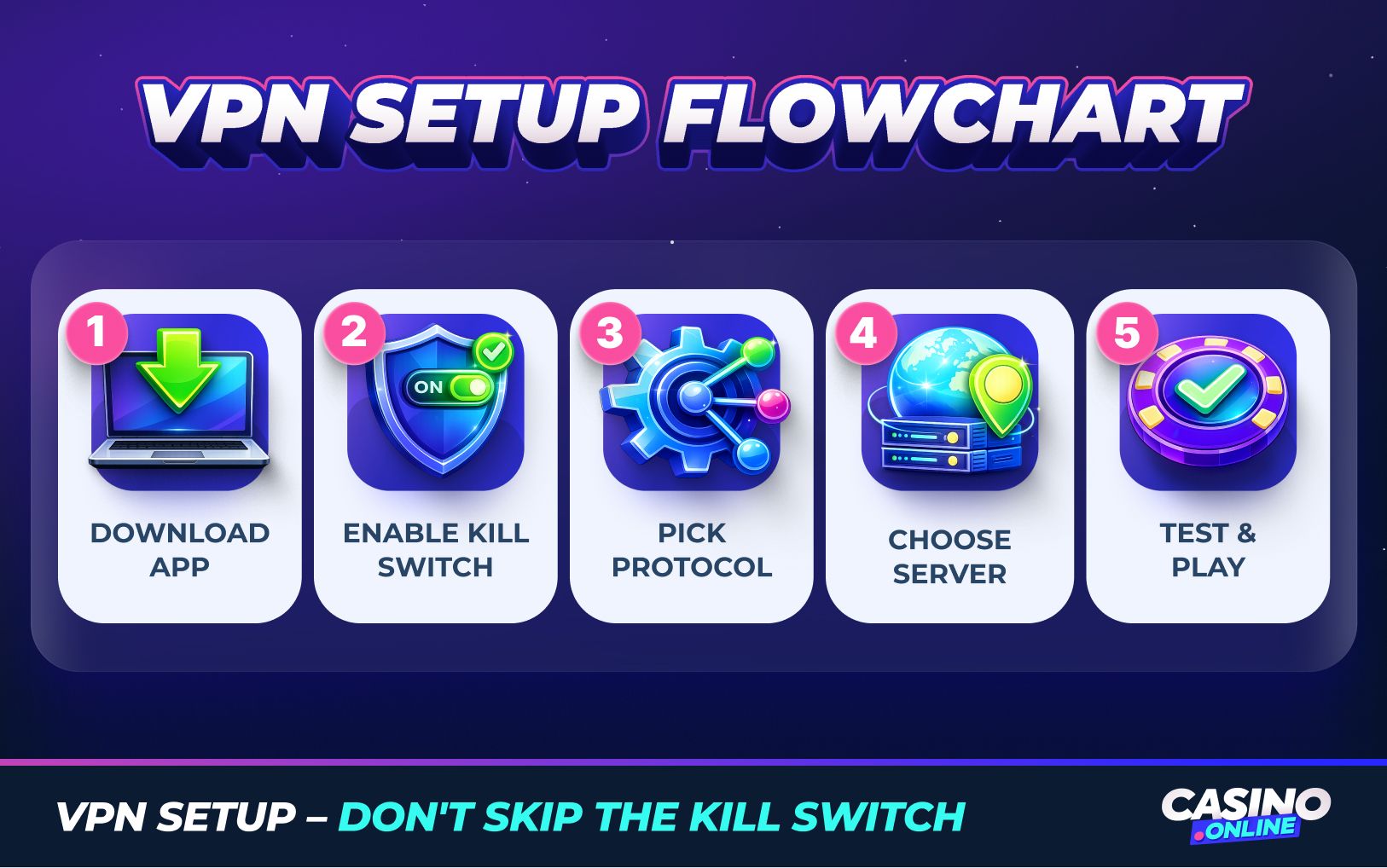
This sequence assumes you have already chosen a legitimate casino and a reputable VPN service.
Step 1: Create and secure your VPN account
First, get the VPN basics locked down before touching casino sites. This sets up your privacy foundation properly.
- Sign up with a top‑tier VPN provider that allows gambling traffic; most general‑purpose services do, but always check their acceptable use policy.
- Enable two‑factor authentication on your VPN account if available.
- Download the official VPN app for your device from the provider’s site or a trusted app store.
Step 2: Configure essential VPN settings
Once installed:
- Turn on the kill switch, so that a dropped tunnel does not expose your real IP to the casino.
- Enable DNS leak protection and disable split tunnelling for your casino browser/app, so all gambling traffic stays in the tunnel.
- Pick a modern, stable protocol such as WireGuard or OpenVPN, which independent tests show to be both secure and efficient.
These basic tweaks stop most of the obvious leaks that undermine privacy or cause logouts.
Step 3: Choose a sensible server location
Server choice separates smooth sessions from endless support tickets. Here's how to pick smart:
- Select a country where your chosen casino is licensed to operate and accepts players.
- Avoid locations that obviously conflict with your account details; if your profile and documents look British, constantly logging in from a far‑flung tax haven is a red flag.
- Prefer physically closer servers for better speeds and lower latency.
Guides to gambling VPNs regularly recommend nearby European hubs (for example, the same region your casino targets) rather than exotic locations that might trigger manual reviews.
Opinion of Andrew Collins
“⚠️ CRITICAL: Kill switch ON or your real IP leaks mid‑hand. Test with whatismyipaddress.com before depositing.”
Step 4: Log in to the casino
VPN's running, server selected; now the moment of truth. Log in carefully to avoid early flags:
- With the VPN active and connected, open your browser or casino app.
- Clear cookies or use a fresh browser profile if you have previously accessed the site without a VPN; some casinos cache location data.
- Log in or register as usual, making sure your personal details remain truthful.
If the site displays a "not available in your country" message even over VPN, do not try to brute‑force dozens of other locations; the casino may use deeper checks than simple IP lookup.
Step 5: Test games and payments
Before committing serious bankroll:
- Load a few different games and check that they run smoothly.
- Visit the cashier to confirm which deposit and withdrawal methods are available for your region.
- Make a very small test deposit and, ideally, a small withdrawal after a session to see how the casino behaves with your VPN connection.
This shakedown run reveals most geo‑related quirks and gives you an early signal on whether KYC or delays are likely.
Server Location Tips for Casino VPN Use
Picking the right server is like choosing your dart: wrong one and you miss the board entirely.

Mobile (Android and iOS)
Opinion of Andrew Collins
“Pro tip: Avoid data centre servers (casinos flag them) and constant country‑hopping. Stability beats cleverness every time.”
Advanced Setups: Desktop, Mobile, and Router
Different VPN apps handle these platforms differently, so check your provider's device support first.
Desktop and laptop
Casino‑friendly VPNs tend to look a lot like streaming‑friendly VPNs: fast, privacy‑focused, and with a wide choice of locations. NordVPN and Surfshark deliver the speed to handle live dealer streams without buffering, plus obfuscated servers that dodge casino geo-blocks like a rugby winger evading tackles.
Mobile (Android and iOS)
Mobile VPNs for casino play need split-tunnelling smarts and battery-friendly speed; no drain like a poorly baited fishing line. ExpressVPN and Surfshark shine here, powering smooth blackjack sessions on the go while masking your IP through casino apps that sniff for location cheats like bloodhounds.
Independent reviews note that most major VPN providers now maintain strong mobile apps with the same core security features as their desktop clients.
Router and whole‑network VPNs
Some enthusiasts configure their router to connect through a VPN, sending all home traffic, including smart TVs and consoles, through the tunnel.
Covers all devices, no apps needed
Always-on casino protection
No forgetting VPN on laptops
Tricky server per-device tweaks
Breaks streaming geo-locks
Speed hits the whole network
Router setups are best left to confident users who understand how to revert changes if something goes wrong.
Provider pick matters here; NordVPN/Surfshark offer excellent router firmware; budget VPNs often don't.
Opinion of Andrew Collins
“Pro tip: Start simple (phone/laptop app), scale to router only if you're comfortable with firmware flashing.”
Troubleshooting Common VPN Casino Problems
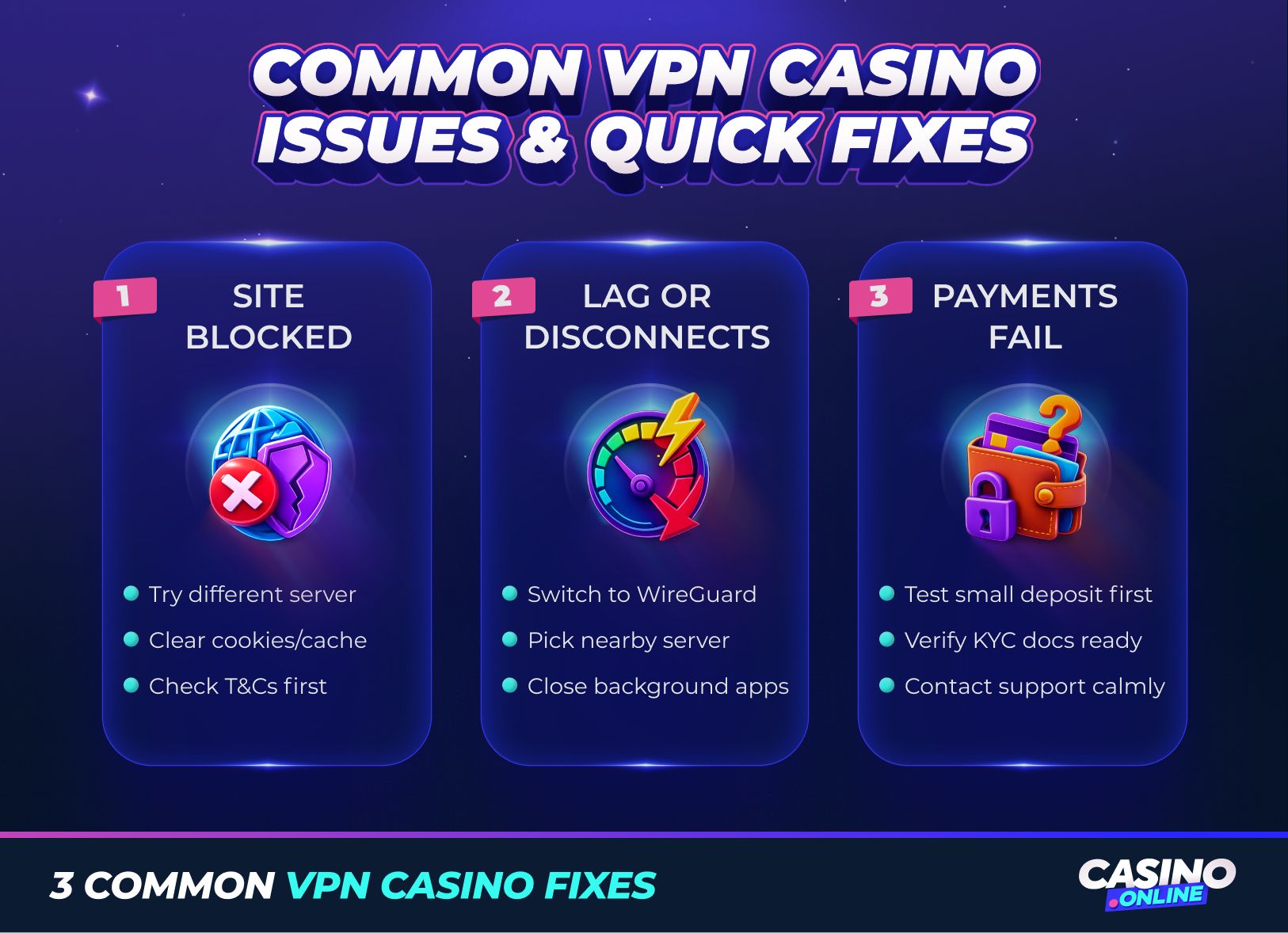
Even with a solid setup, things can go sideways. These are the issues players most often report when mixing VPNs and casinos, along with typical fixes.
Casino is still blocked or partial lobby
- Try a different server in the same country rather than switching countries at random.
- Clear cookies and cache; some sites store past geo‑data.
- If only certain games fail to load, the restriction may be from the game provider, not the casino as a whole.
Disconnections and lag
- Switch to a nearby server with lower ping.
- Change VPN protocol; WireGuard and modern OpenVPN settings usually perform better than older options.
- Avoid streaming or heavy downloads on the same connection while playing.
Payments are missing or failing
- Some banking options only appear for specific regions; what you see over VPN may differ from what you saw without it.
- If deposits work but withdrawals fail or stall, support may be reviewing your account for location or KYC issues.
At this point, switching servers repeatedly or arguing about your "real" country rarely helps. Being honest, providing the requested documents, and staying calm gives you the best chance of seeing funds released.
Opinion of Andrew Collins
“90% of VPN bans happen at withdrawal, not signup. Test small (£10‑20) before betting big.”
Staying Safe and Gambling Responsibly with a VPN
A VPN is a privacy and access tool, not a shield against the realities of variance or poor impulse control.
Best practice:
- Set hard limits on deposits, losses, and session time before you start.
- Keep one clean, honest story for your account details, documents, and usual VPN locations.
- Avoid chasing losses from a new server or country just because you can.
- Use built‑in casino tools such as time‑outs, loss limits, and self‑exclusion if your play starts to feel compulsive.
Industry codes of conduct and regulator guidance now expect both operators and affiliates to promote safer gambling and not present VPNs as a way to hide problematic behaviour.
Nothing in this guide is legal advice. Always check local rules, read each casino’s Terms & Conditions carefully, and use VPNs as a privacy tool, not as an excuse to ignore the basics of safe, sustainable gambling.
FAQs: Using a VPN at Online Casinos
Do I need to keep the VPN on the whole time I play?
Yes, if you choose to use a VPN, you should keep it on from login to logout for that casino session. Dropping the tunnel mid‑session can expose your real IP and may trigger security checks or logouts.
Can casinos tell I am using a VPN?
Many can make an educated guess. They can see data centre IP ranges, sudden country switches, and mismatches between your profile, documents, and connection history. Some also use third‑party tools to flag likely VPN or proxy traffic.
Is a VPN enough to stay anonymous at online casinos?
No. You still leave trails through payments, device fingerprints, browser data, and any documents you provide. A VPN raises the bar for casual tracking but does not create true anonymity.
Should I create a new casino account while on a VPN?
If you plan to use a VPN consistently, it is cleaner to start and stay that way than to switch mid‑life. However, you must still provide accurate personal details and be prepared to verify them if asked.
Can I use a free VPN for casino play?
It is strongly discouraged. Free VPNs tend to be slower, less reliable, and more likely to log or monetise your data, which defeats the privacy benefits and can disrupt sessions.
Is it safer to stick to casinos that openly allow VPNs?
Yes. Casinos that clearly state they accept VPN connections, provided you meet age and KYC rules, present less risk than those that ban VPNs in the small print. Even then, you should still read the terms and keep your play responsible.






Written by
Andrew Collins
Author
I've spent over nine years at five leading iGaming firms - and long before that, I was emptying slots and balancing takings since 1992. From diving deep into slots and unearthing hidden betting strategies, I deliver witty, actionable advice that even seasoned bettors appreciate. Ready to elevate your play with me and casino.online? Let's get started!

Facts checked by
Jacob Evans
Content Writer & Casino Specialist
I'm Jacob Evans, your go-to expert in online gambling. With a robust background in casino gaming and a knack for breaking down complex betting strategies, I'm here to guide you through online casinos, sharing tips to help novices and seasoned bettors excel.