
Best MGA Online Casinos
Sort by:

Available in your region
Ad disclosure


10,000GC Welcome Offer
1SC without deposit
9.8 /10
RTP
96.50%
Payout time
Instant
Payments



100KGC Welcome Offer
2SC without deposit
9.7 /10
RTP
94.40%
Payout time
24 Hours
Payments



$2,250 + 125 Free Spins
150 Free Spins without deposit
6.5 /10
RTP
95.50%
Payout time
Instant
Payments
-

25SC Welcome Offer
7,500GC without deposit
9.5 /10
RTP
94.00%
Payout time
24 Hours
Payments


200.02KGC Welcome Offer
9.6 /10
RTP
95.40%
Payout time
0-2 Hours
Payments


25,000GC Welcome Offer
2.5SC without deposit
8.9 /10
RTP
94.40%
Payout time
3-6 Hours
Payments

65,027SC Welcome Offer
6.4 /10
RTP
94.50%
Payout time
3-6 Hours
Payments

new
50,000GC Welcome Offer
40SC without deposit
9.3 /10
RTP
95.75%
Payout time
3-6 Hours
Payments

80,000GC Welcome Offer
40SC without deposit
9.4 /10
RTP
94.40%
Payout time
3-6 Hours
Payments


$4,000 + 400 Free Spins
8.2 /10
RTP
96.00%
Payout time
3-6 Hours
Payments


Subscribe to our newsletter for the latest casino news and offers.
Can't find what you are looking for? Check the other popular categories we have.


Introduction to the MGA Licence
The Malta Gaming Authority (MGA) licence has been one of Europe’s iGaming gold standards since 2001, regulating remote gaming under Malta’s Gaming Act. It blends strict player safeguards, certified random number generators, self‑limit tools and ADR with an efficient regime that supports EU and wider global reach via the European Economic Area. Unlike the UKGC’s GB‑only focus, a single MGA licence can sit behind multi‑market brands.
The Malta Gaming Authority (MGA) issues a single Malta gaming licence that can act as both a business‑to‑consumer gaming service licence and a business‑to‑business critical gaming supply licence, giving serious gaming operators a recognised route into the European Economic Area and beyond. This Malta online gambling licence sits at the centre of the island’s gaming industry and has become the default benchmark for many international regulatory bodies looking at remote play.
Quick Stats
- Regulator: Malta Gaming Authority (MGA)
- Tier level: Tier 1 EU licence
- Application fee: €5,000 (non‑refundable)
- Fixed annual B2C licence fee: €25,000 (Type 1 to 3), €10,000 if only Type 4
- B2B fixed annual licence fee: €25,000 to €35,000 depending on annual revenue
- Gaming tax: 5% of gaming revenue from Malta‑based players
- Compliance contributions: sliding scale on GGR by game type with annual mins/maxes
- Scope: EU / EEA gateway with global reach, subject to local blocks and restrictions
Opinion of Andrew Collins
"MGA blends EU prestige with global reach. For operators casting wide nets, it gives you a strong rod without weak line."
MGA Strengths & Trade-offs
Ironclad EU player trust
Access multi‑billion EU markets
Fair fees for Tier 1 status
Big global credibility
Strong tech and fairness audits
3 to 6 month licence wait
5% tax on Malta‑based GGR
Heavy AML/KYC burden
Legal Framework and Evolution
The MGA regime sits under Malta’s Gaming Act and related regulations, separating B2C Gaming Service licences from B2B Critical Gaming Supply licences. It covers remote casino‑type games, fixed‑odds betting, pool betting, peer‑to‑peer poker and controlled skill games, plus key platform and content providers upstream. MGA regulations distinguish clearly between a consumer licence for operators that offer a gaming service directly to players and a critical gaming supply licence that covers providers of platforms, RNG engines and other essential regulatory record systems.
Player Protection Directive 2 and its 2024 update tightened rules around self‑exclusion, limits, reality checks and behavioural monitoring, with specific “markers of harm” that operators must track. MGA has also run a sandbox for virtual currencies and distributed ledger technology in gaming, and is expected to keep aligning with wider EU rules such as AMLD and MiCA as they bed in.
Why Choose an MGA Licence?
Operators reach for an MGA licence when they want EU‑level credibility with cross‑border scale. A Maltese licence signals mature governance to banks, PSPs and partners, and still plays well with non‑EU audiences who recognise the brand. Requirements around KYC, ring‑fencing of player funds, technical audits and ongoing supervision go well beyond light‑touch offshore regimes, yet remain more workable than some domestic frameworks for multi‑brand groups. If you are building a long‑term, regulated business rather than a short‑lived bonus shop, MGA fits the bill.
A single MGA licence can cover multiple gaming verticals on one platform, from live casino and virtual sports games to peer‑to‑peer poker and pool betting, which simplifies market access compared with stitching together several domestic permits.
See our licence hub for other regulators.
Player Protection & Fairness
.jpg)
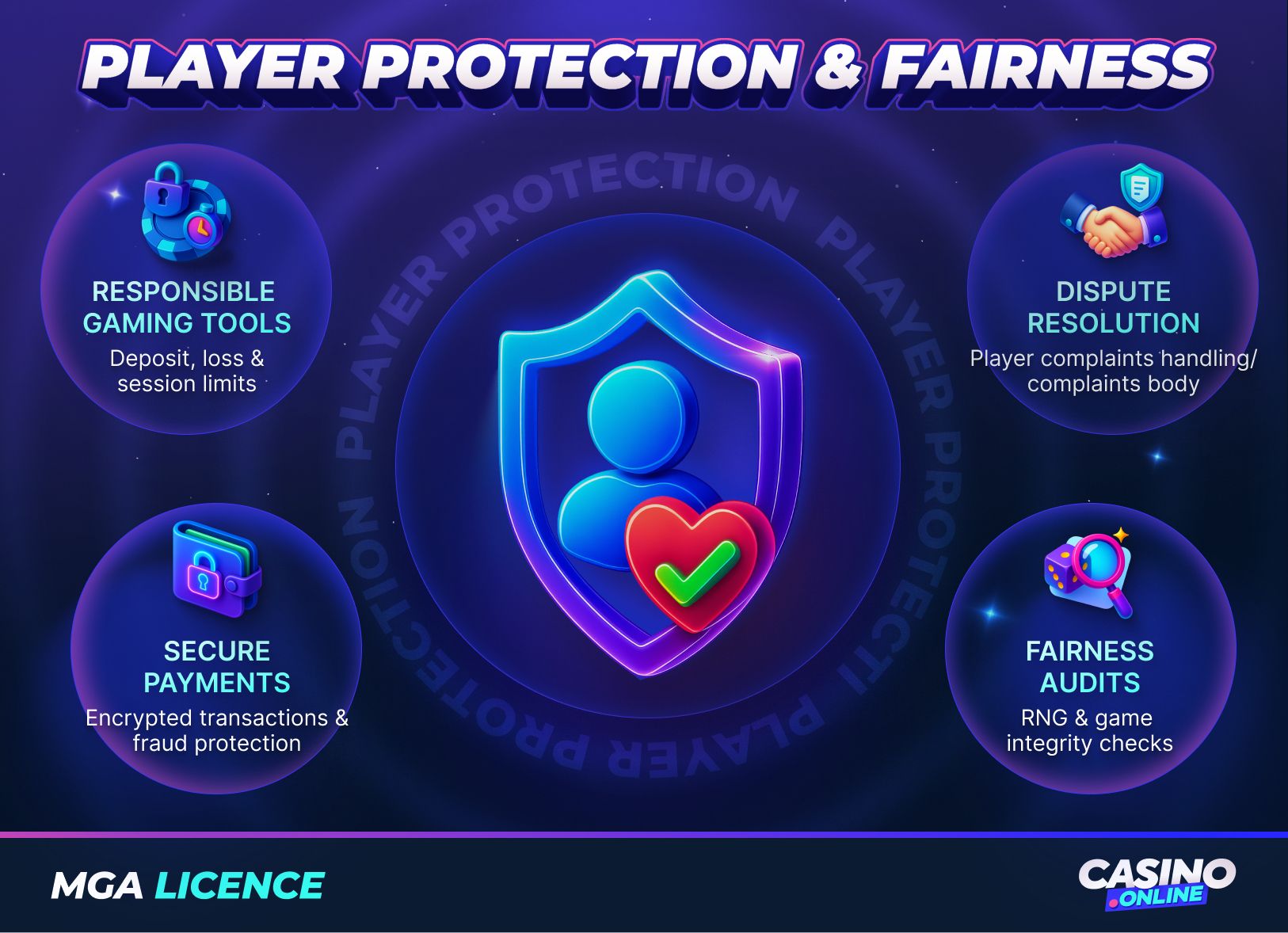
MGA sets a high European benchmark through its Player Protection framework. Licensees must offer self‑exclusion, deposit or wagering limits and reality checks, and are strongly encouraged to add loss limits, session limits and time‑outs. Technical standards require certified RNGs, secure control systems and clear segregation of player funds from operational cash.
The regulator backs this up with audits, thematic reviews and enforcement, including administrative penalties and remediation directives where controls fall short.
Responsible Gambling Tools
Under MGA rules, every remote B2C operator must, as a minimum, provide:
- Self‑exclusion tools for definite or indefinite periods
- Deposit or wagering limits, usually daily, weekly or monthly
- Reality checks that show time spent and wager/loss figures
Most serious brands also add:
- Loss limits and session time limits
- Short time‑outs of 24 hours to 30 days
- Prominent links to RG information and support organisations
Self‑exclusion requests must be implemented immediately, must not be discouraged, and players must still be able to withdraw funds while blocked. Recent MGA reviews have pushed operators to tighten cross‑brand implementation and response times.
Dispute resolution process
The dispute ladder on MGA sites runs as follows:
- Internal complaint to the casino, via support or complaint form.
- If unresolved, escalation to an approved Alternative Dispute Resolution (ADR) entity, such as eCOGRA.
- The ADR decision is binding on the operator under MGA rules, but players still retain the right to pursue court action afterwards.
eCOGRA and other ADR bodies are free for players, and typically resolve most cases within weeks, with more complex disputes capped at around 90 days.
Game integrity standards
Games offered under an MGA licence must be tested and certified by approved labs, and the live implementation must match the certified version. Requirements include:
- Independent RNG and RTP testing against declared payout tables
- Systems audits that confirm demo and real‑money versions behave identically
- Logging and reporting that lets the MGA or auditors verify results when needed
Testing covers the full gaming system and control environment, including back‑office platforms, front‑end clients and the random generator modules embedded where the core game software resides. The system review looks at your full technical setup, from the gaming system and control panel through to how your software generates and stores essential regulatory record data.
Any attempt to alter game parameters without re‑certification risks sanctions or licence action.
Operator compliance checks
Before a licence is granted, the MGA runs:
- Fit and proper checks on owners, directors and Key Function holders
- Financial and business‑plan reviews
- Technical and system audits via approved auditors
Supervision then continues through routine desktop reviews, targeted thematic work, and on‑site or virtual audits of higher‑risk operators and game types.
Self-Exclusion management
Self‑exclusion must be:
- Easy to trigger, with no upselling or retention attempts
- Implemented promptly, blocking access to all gaming while leaving withdrawals open
- Lifted only after a cooling‑off period and an explicit player request, with checks around control and affordability
Where operators run multiple brands under a group licence, MGA expects them to treat exclusions consistently across brands when risk indicators suggest problem play.
AML and KYC requirements
Remote B2C licensees are full AML subject persons in Malta. That means:
- Risk‑based KYC with ID, address and, when warranted, source‑of‑funds / source‑of‑wealth verification
- PEP and sanctions screening, plus enhanced due diligence where needed
- Ongoing transaction monitoring and investigation of unusual patterns
- Suspicious activity reports (SARs) filed with the Financial Intelligence Analysis Unit (FIAU)
MGA and FIAU conduct AML / CFT examinations, and serious failures can lead to remediation orders, administrative penalties or licence action. Maximum administrative penalties can reach up to a significant share of GGR, so compliance is not optional.
Licensing Workflow & Types
MGA offers two main licences:
- B2C Gaming Service licence, a business-to-consumer authorisation for any gaming system that holds player funds and offers a gaming service directly to end users.
- B2B Critical Gaming Supply licence, a business-to-business licence for back‑office platforms, game servers and such software where the random generator or other material elements of the game software reside.
Together, these two‑tier structures let Malta gaming operators align their technical environment and business growth plans with the regulatory framework from day one.
Within the B2C licence, game types cover everything from casino‑type games and secondary lotteries to betting exchange products and peer‑to‑peer games such as poker played in networks or pools.
Key Function holders (CEO, compliance, AML, tech, data protection and others) need MGA approval and must meet ongoing competency requirements.

Opinion of Andrew Collins
“3 to 6 months tests patience, but hits the bullseye on compliant ops every time.”
Licensing steps
Establish a local entity
Incorporate a Malta or EEA company, file incorporation documents and gather ownership, UBO and governance details the gaming authority will use in its fit and proper persons checks. Prepare UBO declarations, director details and registered office documents.
Submit application and disclosures
Pay the €5,000 non‑refundable gaming licence application fee and upload the applicant’s business plan, financial forecasts and core policies. This includes policies on AML, responsible gaming, data protection and sports integrity where relevant.
Review and fit and proper checks
MGA reviews structure, ownership, finances and policies, and may issue RFIs. Timelines typically run around 12 to 16 weeks of active review, stretching toward 3 to 6 months overall for more complex groups.
Systems review and technical audit
Once documents pass review, the applicant sets up staging and production environments. Testing covers the full gaming system and control environment, including platforms and random generator components, and the system review confirms that material elements match what was described in the application process.
Approval and go‑live
Pay the initial annual licence fee and any other dues. Once the MGA accepts the systems review, the licence is issued (usually for ten years), and the operator can launch live.
Ongoing compliance
Annual licence fees, monthly compliance contributions and 5% Malta‑player gaming tax apply, along with regular reporting, audits and ADR / complaints data submissions. Over time, the Authority will also run targeted compliance audits that compare your live operation to the application process and original business plan, checking that regulatory objectives still line up with the way the operator manages its sites.
Licensing Costs: Fees, Renewal & Compliance
Below is a realistic cost snapshot for a typical B2C operator.
For most B2C brands, the combination of fixed fees, compliance contribution on gaming revenue generated and audit spend still leaves room for solid business growth once the site generates revenue at scale.
Opinion of Andrew Collins
“That 5% local tax stings less than people think. Budget your bait properly, and the prestige pays you back in bigger fish.”
Cross-Licence comparison
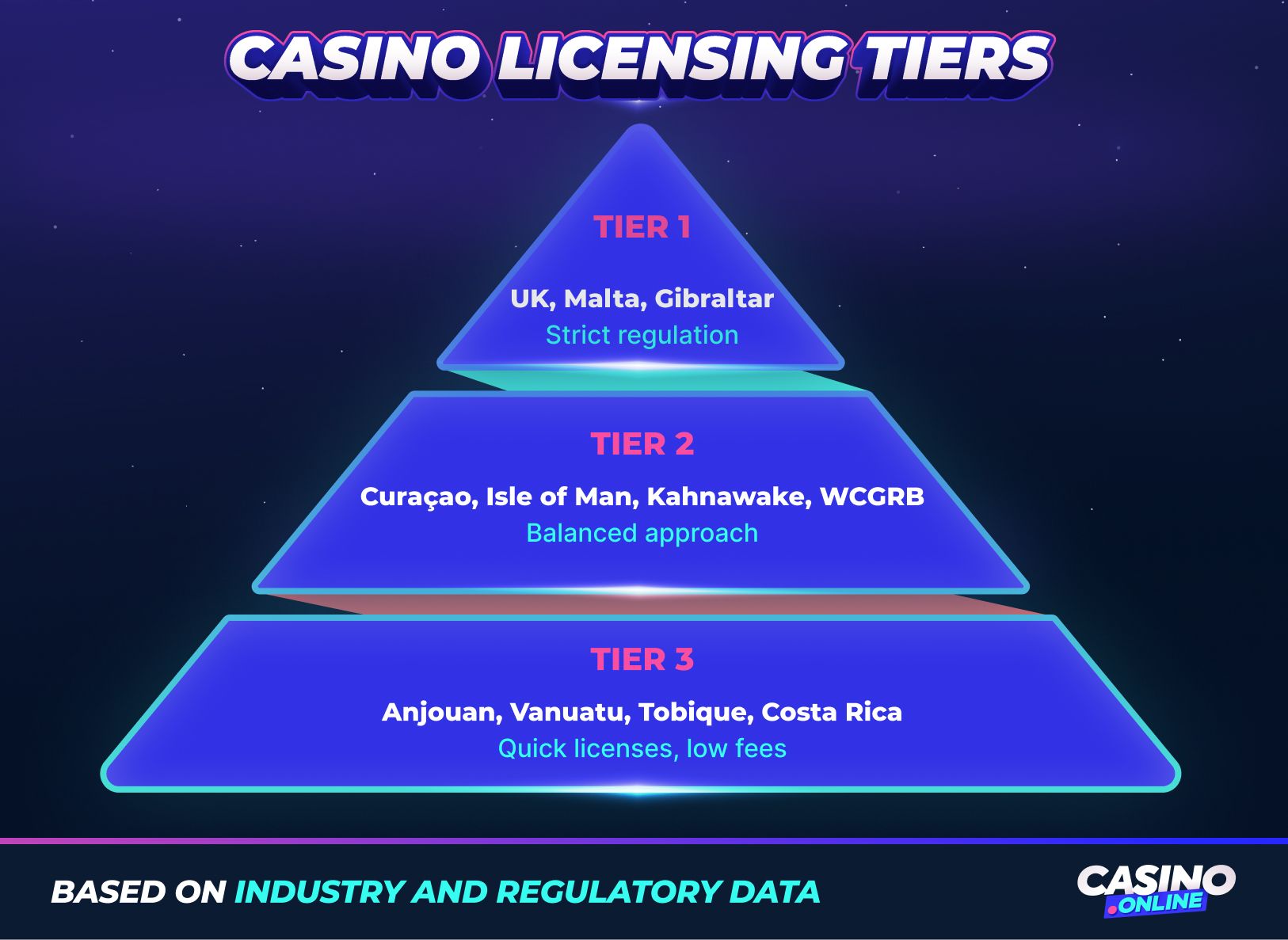
MGA leads Tier 1 with EU-wide clout, but stacks how against Gibraltar's tax perks (Tier 2) and Costa Rica's no-reg laxity (Tier 3)? Quick view on costs, protections, and reach.
.jpg)
Elite EU/EEA trust marks
Full remote scope under one framework
Rigorous audits & supervision
Strong safeguards + ADR
High prestige with payment partners
€5k app + €25k annual fee
3 to 6 month approval process
VS
Low effective tax headline
Fast gateway for corporate structures
Single licence covers broad activities
Crypto‑friendly posture in some cases
Established infrastructure and specialist talent
Post-Brexit GB/EEA limits
Moderate protections vs MGA
Opinion of Andrew Collins
“MGA crushes Gibraltar on reach and Costa Rica on safety. For long‑term play, it is your treble‑20.”
Verification and Contact
Players and partners can verify any MGA licence via the public register, which shows status, company details and game types. Always confirm the licence number before depositing.
MGA Licensee Register
Mailing address, phone & website
- Address: Malta Gaming Authority, Building SCM 02‑03, Level 4, SmartCity Malta, Ricasoli SCM1001, Malta
- Phone: +356 2546 9000 (Mon to Fri 09:00 to 17:00)
- Website: https://www.mga.org.mt/
Featured MGA-Licensed Casinos
All casinos below hold active MGA B2C licences and strong public track records at the time of writing. Always re‑check the MGA register and the operator’s own footer before you play.


Opinion of Andrew Collins
“Check MGA licence numbers like you’d check dart flights. Spot the fakes before you throw cash.”
How to Choose a Casino
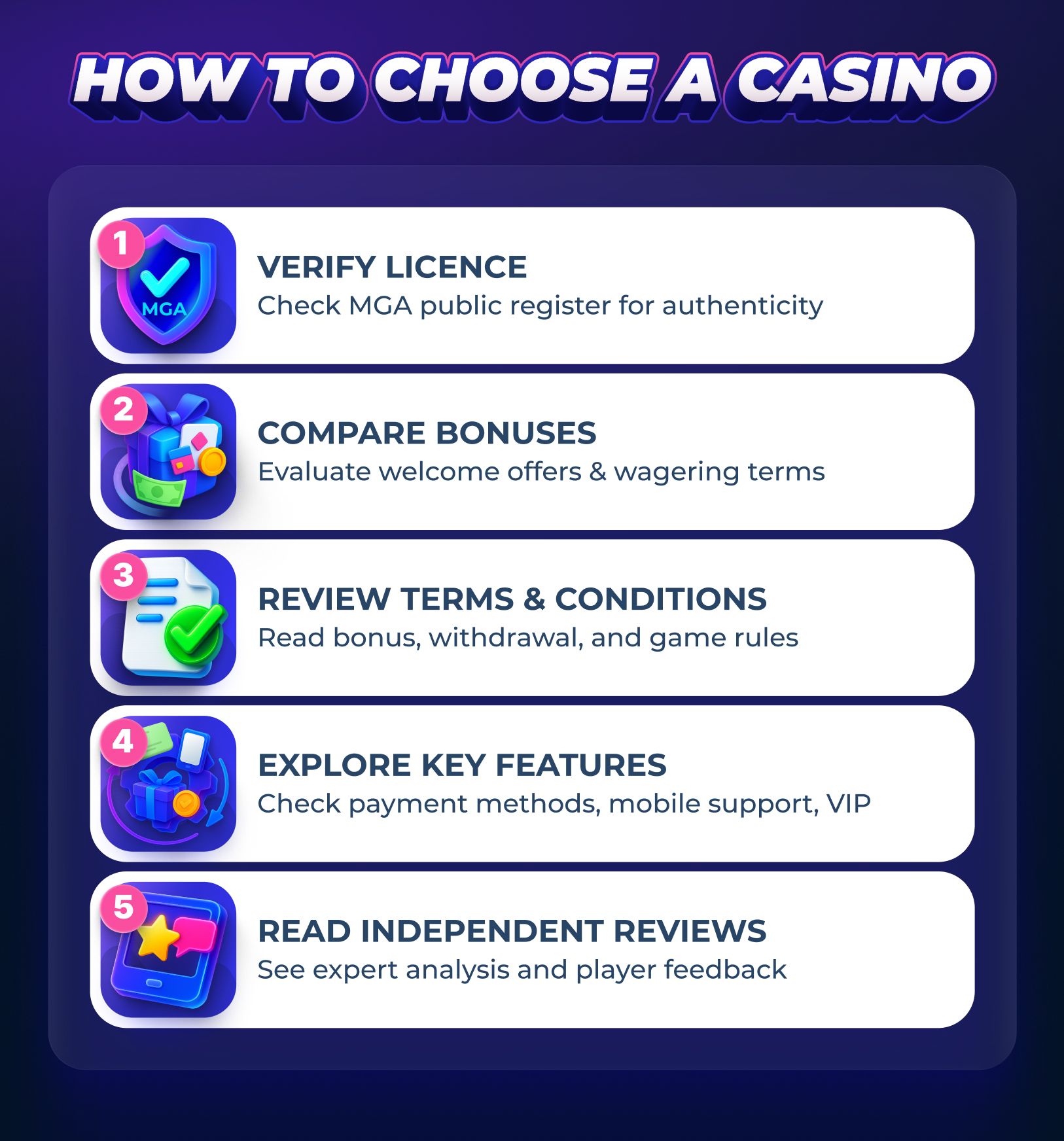
Smart pick? Nail these five steps for a secure MGA site packed with fair play.
Step 1: Verify the licence
Use the MGA public register and the casino’s footer. Match company name and licence number; avoid vague “international licence” claims.
Step 2: Compare bonuses properly
Do not chase headline percentages. Look for sensible wagering, clear max win and fair game weightings.
Step 3: Read the terms and conditions
Withdrawal rules, verification triggers and bonus terms should be clear and not predatory. Watch for high document hurdles on small cashouts.
Step 4: Test key features
Support response, mobile UX, payment methods and withdrawal speeds all matter more than a one‑time bonus.
Step 5: Use independent reviews and player feedback
Real player stories are often the quickest way to spot slow‑pay or KYC horror shows.


How We Rate Casinos
Industry Outlook & Market Trends
European online gambling keeps growing, with online GGR around €45 to 50 billion and moving toward nearly half of total gambling revenue by the end of the decade. MGA’s slice of that is material for Malta’s economy, with remote gaming contributing roughly 10% of national GVA and employing over ten thousand people directly.

Global Casino revenue & Market Analysis
Looking into 2026 and beyond, expect:
- Tighter player‑protection rules and data‑driven harm detection
- Continued focus on AML, sanctions and cross‑border enforcement
- More scrutiny of self‑exclusion and cross‑brand controls
- Innovation in game formats, including VR / AR, within stricter guardrails
White‑label and turnkey models remain popular for emerging‑market targeting, but the MGA is clearly orienting toward quality over sheer licence volume.
Global Gambling Regulation Report
Risks & Limitations
An MGA licence is not a free pass. Operators face:
- Strict bans on targeting vulnerable customers with bonuses or aggressive marketing
- 5% gaming tax on Malta‑based GGR on top of corporate tax and compliance contributions
- Geo‑blocking requirements for restricted and blacklisted countries, plus sports‑integrity obligations
Breaches can result in remediation orders, heavy fines, public naming or full licence revocation. Cut corners on AML, RG or reporting, and you will soon be back on the beach without a rod.
Responsible gaming & support
MGA expects operators to treat responsible gaming as a core part of their regulatory compliance, not just a cosmetic footer page. Requirements and expectations include:
- GamCare‑style toolsets with self‑exclusion, limits and reality checks
- Clear links to helplines and counselling services in relevant markets
- Behavioural screening and intervention processes are baked into day‑to‑day operations
Regulatory focus has shifted from box‑ticking policies to real‑world outcomes, including how staff handle red‑flag behaviour and how systems enforce blocks. The framework also allows the Authority to liaise with law enforcement agencies where suspected criminality or serious harm is uncovered, reinforcing the wider public‑interest regulatory objectives.
Responsible Gambling Guide
Player-Protection organisations
Several independent bodies intersect with MGA‑licensed play:
- eCOGRA: testing lab and ADR provider, handling disputes free of charge for players at participating sites.
- European Gaming and Betting Association (EGBA): industry body promoting common standards on RG, AML and advertising in Europe, often citing MGA as a reference regime.
Rules are framed around responsible gaming outcomes, with a clear focus on reducing gaming risk for minor and vulnerable players rather than just ticking boxes. These organisations do not replace the regulator, but they add extra eyes on fairness and complaint handling.
Self-Help tools
MGA expects operators to give players practical tools they can control themselves, not just buried policy PDFs. At a minimum, licensed sites must offer clear safer‑gambling pages one click from anywhere, links to recognised help organisations, and prominent access to limits and self‑exclusion.
On top of operator tools, the MGA now provides its own free, anonymous online self‑assessment test so players can check their habits and, if needed, are signposted directly to local support services such as Sedqa, Caritas, OASI and the Responsible Gaming Foundation. Combined with in‑account limits, time‑outs, reality checks and brand‑side education, these self‑help options give players a way to spot trouble early and tighten their own drag before losses get out of hand.
MGA complaint portal
If the casino cannot or will not resolve a complaint:
- Exhaust the operator’s internal complaint process.
- Escalate to the named ADR (for example, eCOGRA) using its web form.
- If you still believe your rights have been breached, you can bring the matter to the MGA’s Player Support Unit.
The licensee portal and player support channels together build an essential regulatory record of how complaints are handled across the gaming industry, which the Authority can mine for patterns of gaming risk. At heart, the Malta Gaming Authority MGA regime is about safeguarding consumers while still giving gaming operators a clear, rules‑based path to market access and long‑term profitability.
Lodge a Complaint
Opinion of Andrew Collins
“MGA’s self‑limits and complaint routes act like a tight drag on your reel. They stop a bad run from turning into a snapped line.”
Conclusion
The Malta Gaming Authority licence fuses Tier 1 prestige with practical EU/global reach as a gaming service licence gateway for operators in the iGaming industry targeting €25B+ markets,without UKGC's GB-only limits. Players benefit from fortress-grade safety through self-limits, ADR, and certified random number generator tech in gaming and control systems, while operators meet operational and statutory requirements via a rigorous licensing process ensuring fit and proper persons.
The compliance grind, including a non-refundable application fee and system review, forges loyalty across gaming verticals like fixed odds betting, live casino, peer-to-peer poker, and virtual sports games. Ready to cast responsibly, balancing gaming risk with regulatory compliance?
You can find on this page:
FAQ - MGA Licence
How long does MGA approval take?
Realistically, allow 3 to 6 months from complete submission through fit & proper, systems review and final sign‑off, depending on complexity and how quickly you answer RFIs.
What are the core fees for a small operator?
You are looking at a €5,000 application fee, a €25,000 fixed annual B2C licence fee (or €10,000 if you are Type 4‑only), plus compliance contributions on GGR and 5% tax on Malta‑based players.
How does player verification work?
Operators must run KYC checks, including ID and address verification, and apply enhanced checks when warranted. Self‑exclusion can run from 24 hours to 12 months or indefinitely.
What are the key player protections?
Mandatory tools include self‑exclusion, deposit or wagering limits and reality checks, backed by RG policies and ADR access. Games and systems are audited for fairness and reliability.
Can non‑EU players use MGA sites?
Yes, many MGA‑licensed brands target non‑EU markets, but operators must respect local laws and geo‑block restricted countries. AML and KYC standards apply to all customers, not just EU residents.
You can find answers to